MORE =
Kathleen Petyarre (born Kweyetwemp Petyarre; c. 1940) is an Australian Aboriginal artist. Her art refers directly to her country and her Dreamings. Petyarre’s paintings have occasionally been compared to the works of American Abstract Expressionists Jackson Pollock and Mark Rothko, and even to those of J.M.W. Turner. She has won several awards and is considered one of the ‘most collectible artists in Australia’. Her works are in great demand at auctions. However, due to ongoing health problems, she has now all but retired from painting.
Kathleen Petyarre was born at Atnangkere, an important water soakage for Aboriginal people on the western boundary of Utopia Station, 150 miles (240 km) north-east of Alice Springs in Australia’s Northern Territory. She belongs to the Alyawarre/Eastern Anmatyerre clan and speaks Eastern Anmatyerre, with English as her second language. Petyarre is the niece of the influential Aboriginal artist Emily Kame Kngwarreye and has several sisters who are also well-known artists in their own right, among them Gloria, Violet, Myrtle and Jeanna Petyarre. Kathleen, with her daughter Margaret and her sisters, settled at Iylenty (Mosquito Bore) at Utopia Station, near her birthplace.
Petyarre was introduced to the batik medium at a hippy commune on a visit to Wollongong, New South Wales, and began making her own in 1977 with the support and encouragement of the linguist and adult education instructor Jenny Green. Petyarre continued to produce batiks with other women at Utopia until the late 1980s, when, prompted by allergies to the chemicals they were using, she began developing her signature style painting with acrylic on canvas.
Petyarre’s technique consists of layering very fine dots of thin acrylic paint onto the canvas, evoking the Aboriginal custom of ceremonial body painting, to carefully construct abstract landscapes that reveal a remarkable depth when viewed up close. The dots are used to represent, among other things, flowers and spinifex, or animated clouds of sand, hail or even bush seeds. Meanwhile, various shapes and colours are used to depict geographical features such as sand-hills, watercourses and rockholes. Her imagery has been described as “simultaneously macro- and microcosmic”.
Most of Petyarre’s paintings detail the journeys of her Dreaming Ancestor, Arnkerrth, the Old Woman Mountain Devil, and are indicative of the Aborigines’ traditional land navigation skills. She adopts an aerial view typical of her region’s artworks to reconstruct memorised landscapes and express her Dreamings as “a barely tangible, shadowy palimpsest, overwritten, as it were, by the surface colours and movement”. She describes her paintings as “like looking down on my country during the hot time, when the country changes colour… I love to make the painting like it’s moving, travelling, but it’s still our body painting, still our ceremony.”
Since about 2003–2004, Petyarre’s style has become bolder, with clusters of larger dots and stronger lines alongside the very fine textures for which the artist is known. While this style has been decried in some quarters as being less refined, it has also been hailed as a logical artistic development towards a more powerful and dramatic mode of expression, “perhaps more abstract, certainly more modern in its technicality and presentation”.
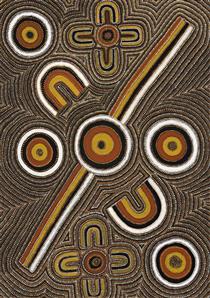 Untitled, 0Q41Kathleen Petyarre • 1990
 Mountain Devil Lizard DreamingKathleen Petyarre • 1992
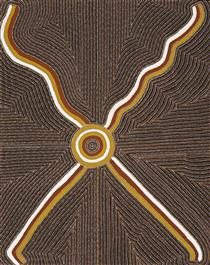 Untitled, 92A052Kathleen Petyarre • 1992
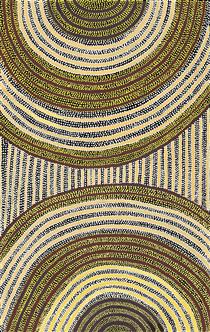 Body Paint (93L055)Kathleen Petyarre • 1993
 Untitled, 93J018Kathleen Petyarre • 1993
 Mountain Devil DreamingKathleen Petyarre • 1994
 Body Paint, 94A039Kathleen Petyarre • 1994
 Green Bean DreamingKathleen Petyarre • 1994
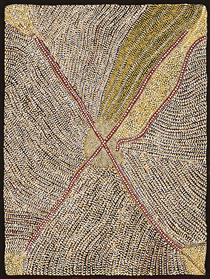 Mountain Devil DreamingKathleen Petyarre • 1994
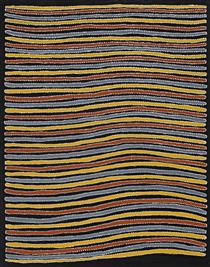 Untitled, 94E006Kathleen Petyarre • 1994
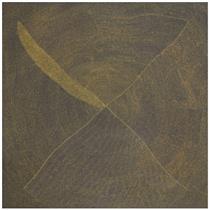 Mountain Devil Lizard Dreaming (After Sandstorm)Kathleen Petyarre • 1996
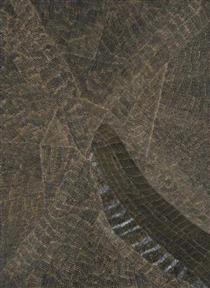 Arkerrthe Awelye, Mountain Devil Lizard DreamingKathleen Petyarre • 1998
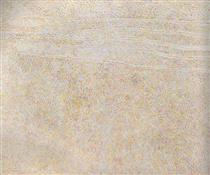 My Country / Hailstorm (Bush Seeds)Kathleen Petyarre • 1998
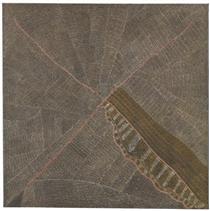 Mountain Devil Lizard DreamingKathleen Petyarre • 1998
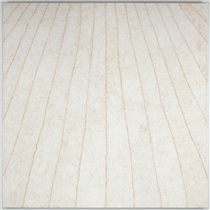 Mountain Devil Lizard Dreaming – Sand-Hill Country (after Hailstorm)Kathleen Petyarre • 2000
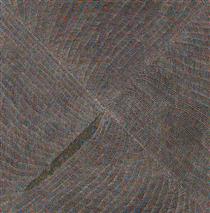 Mountain Devil Lizard DreamingKathleen Petyarre • 2000
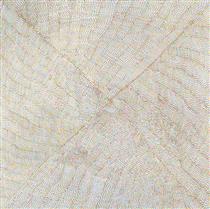 AtnangkereKathleen Petyarre • 2000
 Untitled, 04D010Kathleen Petyarre • 2004
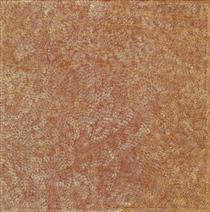 SandhillsKathleen Petyarre • 2004
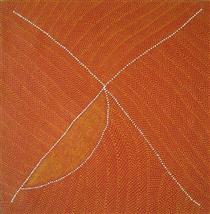 Mountain Devil LizardKathleen Petyarre • 2006
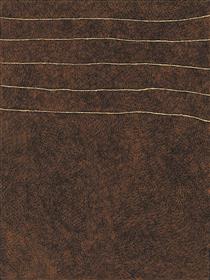 SandhillsKathleen Petyarre • 2007
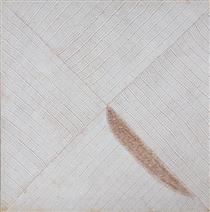 Untitled, 07D62Kathleen Petyarre • 2007
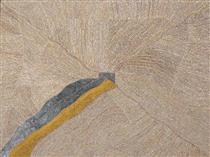 Mountain Devil Lizard DreamingKathleen Petyarre • 2008
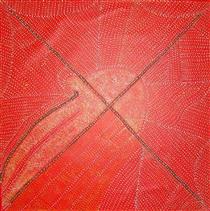 Mountain Devil Lizard DreamingKathleen Petyarre • 2010
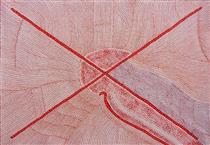 Mountain Devil Lizard DreamingKathleen Petyarre • 2010
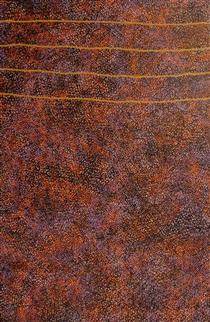 My Country – Bush Seeds (KP1298)Kathleen Petyarre • 2010
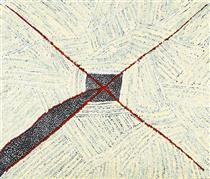 Mountain Devil Lizard DreamingKathleen Petyarre • 2013
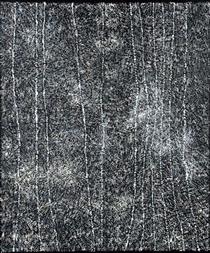 My Country – Bush SeedKathleen Petyarre • 2016
 Mountain Devil LizardKathleen Petyarre • ?
 My Country / HailstormKathleen Petyarre • ?
Kathleen Petyarre (c. 1940–2018) original acrylic paintings generally range from $3,000 AUD to $27,000 AUD depending on size, complexity, and subject matter. Smaller or minor works start around $1,100 AUD, while major gallery or museum-grade masterworks can reach up to $50,000 AUD. [1, 2, 3, 4]
Gallery Price Estimates by Size
Small (approx. 60 x 60 cm): Around $3,000 AUD
Medium (approx. 90 x 90 cm to 120 x 90 cm): $7,750 AUD to $9,950 AUD
Large / Major Works (approx. 140+ cm or large scale): $16,500 AUD to $27,000+ AUD [1, 2]
Key Factors Affecting Value
Motifs: Highly intricate Mountain Devil Lizard Dreaming (Arnkerrthe) and Bush Seed series command strong collector demand. [1, 2, 3]
Provenance: Pieces sourced directly from the artist with documented gallery certificates of authenticity hold higher secondary and retail values. [1, 2]
Market Standing: Recognized by the Australian Art Collector Magazine as one of Australia’s most collectable artists. You can view current available pieces via Mbantua Gallery or check specialized offerings at Altyerre Aboriginal Artwork. [1, 2, 3, 4, 5]
If you are looking to buy or sell a specific piece, please share:
- The dimensions of the artwork
- The specific Dreaming/Subject (e.g., Mountain Devil Lizard, Bush Seeds)
- Whether it includes a Certificate of Authenticity
I can help provide a more tailored valuation context.
February 17, 2026